
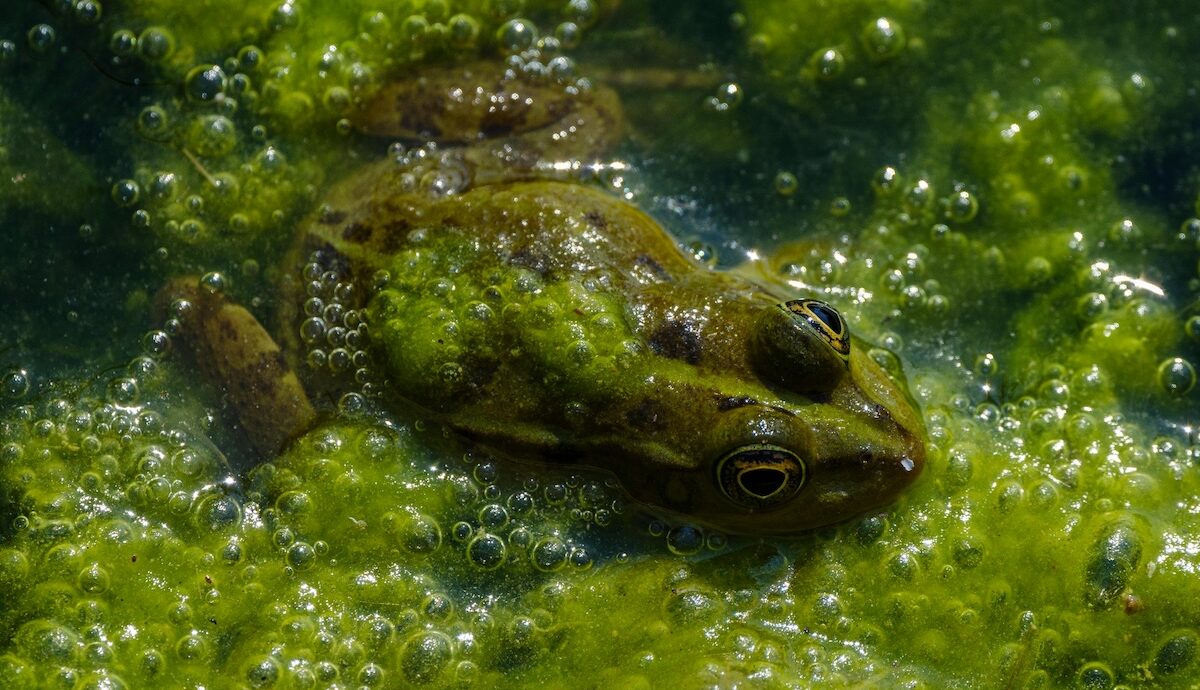
If you’ve ever dipped your hand into a pond or dam and felt a slippery, slimy layer on the surface, or noticed tangled green strands floating like underwater hair, you know that “green slime” can be both fascinating and frustrating. But slime is rarely as simple—or as bad—as it looks. It’s a sign, a symptom, and sometimes even a solution all at once.
The Many Faces of Green Slime
What most people call “slime” can be a lot of different things. Some of it is a weed, some of it is algae, and some of it is a living, sticky, gelatinous community of microorganisms.
On a calm morning, you might see duckweed, azolla, or salvinia forming a tiny, delicate mat on the water—clumped together like a miniature green blanket. Elsewhere, hair-like filaments rise from the bottom of the pond, wrapping around rocks and stems like threads of underwater yarn. And occasionally, you’ll see a slick on the surface that glows fluorescent green in the sunlight, almost like paint floating on water.
In other cases, slime is truly the stuff from childhood imagination: thick, gelatinous blobs that stick to the walls of pipes, gather on equipment, and float around in cricket-ball-sized globs.
Beneath the surface, these can be composed of algae, diatoms, bacteria, fungi, or a combination of all of them—a living community that grows, clumps, and captures particles in the water. In a healthy system, it’s not just harmless; it’s part of the natural filtration and nutrient cycling that keeps your water alive.
Slime as a Signpost
Not all slime is a problem. In fact, biofilms and algae can play important roles: filtering water, producing oxygen, and forming habitats for aquatic life. But when slime grows aggressively, it’s usually a signal that your water system is out of balance. Think of it like a canary in the coal mine.
You’ll notice it first in subtle ways: a greenish cloud starting to form, a filamentous mat creeping across the bottom, or tiny floating weeds beginning to dominate a section of the pond.
Over time, these signals can escalate, especially in warmer months when sunlight increases and water temperature rises. If left unchecked, a small patch can become a dense layer, choking sunlight, restricting oxygen, and overwhelming other plants and fish.
What Slime Needs to Grow
Slime is remarkably opportunistic. Like any living thing, it thrives when conditions are right:
– Nutrients – Phosphorus is the main fuel, even in tiny amounts. Nitrogen in the form of ammonia, nitrate, or nitrite also contributes. These nutrients often come from fertilisers, livestock excrement from paddock runoff, reclaimed water, or even fish waste.
– Sunlight – Algae and filamentous weeds rely on sunlight to grow. Shaded or deeper areas can slow growth, but wherever light penetrates, the green carpet spreads.
– Temperature – Warm water accelerates reproduction and growth, turning a small patch of slime into a sprawling mat more quickly.
Even in pristine streams and untouched ponds, slime exists naturally. Rocks are slippery, surfaces are coated, and biofilms are just a part of life. But when nutrient levels spike, that natural slime becomes prolific—and that’s when it starts to signal trouble.
Why Slime Isn’t Always the Enemy
It’s important to remember that slime, algae and plants are part of a functioning aquatic ecosystem. They provide food for insects, fish and birds. They stabilise nutrients and help oxygenate water, and act as protective layers on plants; shielding them from chemical or biological stressors.
The problem isn’t slime itself—it’s when there is too much of it. This is often triggered by excess phosphorus the aquatic system can’t dilute. When this happens, the pond stops being a balanced ecosystem and becomes a nutrient-rich playground for algae and weeds.
Managing Slime Naturally
While sunlight and temperature are largely uncontrollable, nutrient management is where you can make a difference. There are several natural approaches to controlling green slime:
– Aeration – Introducing oxygen into the water encourages beneficial bacteria that process nitrogen and prevent anaerobic slime growth in pipes, filters and stagnant areas.
– Phosphorus binding – Safe compounds now exist that chemically bind phosphorus, making it unavailable to algae and slime, and locking it away at the pond bottom.
– Biological treatments – Bacteria-based products penetrate slime layers, break down nutrients and restore ecological balance.
– Mechanical removal – Harvesting algae mats or floating plants physically removes nutrients from the system.
– Ecosystem balance – Encouraging native plants, maintaining diverse species and managing fish populations helps keep slime growth in check naturally.
Ultimately, it’s about balance, observation, and intervention when necessary. Slime is a living indicator. Pay attention to it, and it can guide you toward maintaining a healthy, vibrant pond.
The Takeaway
Green slime isn’t a villain—it’s a storyteller. It tells you what’s happening in your water, what nutrients are present and when your ecosystem is tipping out of balance. By understanding its forms, its causes, and how to manage it naturally, you can keep your pond healthy and thriving—slimy textures included.
Healthy water is rarely slime-free. But in the right balance, it’s alive, dynamic, and ready to support life.