
Managing weeds and algae in your dam is often a balancing act. Chemicals like algaecides and herbicides are tools in your toolbox, but the way you use them can make all the difference between a successful treatment and a disaster for your ecosystem. Here’s a practical guide to using these treatments responsibly and effectively.
First, Should You Use Chemicals?
Before reaching for a chemical, pause and ask yourself: do you really need it? Not every dam problem requires algaecide or herbicide, and using chemicals unnecessarily costs money and can stress your ecosystem.
Here’s a simple way to think about it:
- New or well-maintained dams: Usually, these don’t need chemical intervention. If your dam is only a few years old, has a healthy balance of plants, minimal algae, and regular aeration or maintenance, you’re better off managing it naturally.
- Older or neglected dams: If your dam hasn’t been touched in years and algae or weed growth is thick, chemicals might be appropriate to “press the reset button.” Especially if mechanical removal is impractical or access is limited, a carefully planned chemical treatment can help restore balance.
- Consider water use and ecosystem: Chemicals need to be handled differently depending on whether your dam contains fish, provides drinking water, or flows into other waterways. A quick fix without thinking about the broader impact can create bigger problems later.
- Maintenance appetite: Non-chemical options like aeration, harvesting, or manual removal work, but they take time and effort. Chemicals are tempting because they seem easy, but remember—they don’t address the root cause: nutrient levels that fuel algae and weeds.
If you’re unsure whether chemicals are right for your situation, check out the video above for a deeper dive into when to use chemicals like algaecides and herbicides.
We encourage you contact us before deciding to go the chemical route. Our advice is FREE, customised to your dam, and comes with no obligation. We can help you choose the best approach for your situation.
Okay, so you’ve decided to use chemicals.
Which Chemicals Should I Use?
We recommend and stock the following algaecides and herbicides. They are effective, follow Australia’s strict regulations, and minimise damage done to the aquatic ecosystem while killing the pest.
Tips When Using Algaecides and Herbicides to Reduce Damage in Your Dam
1. Follow the Label – It’s There for a Reason
The first and most important rule is simple: follow the label. Those numbers aren’t arbitrary—they’re designed to minimise risks to your fish, your bacteria, and the overall ecosystem. Going above the recommended dose might seem like it’ll give a better kill, but it’s a gamble that rarely pays off.
Before you even think about dosing, know how much water you’re dealing with. Dams are rarely uniform—depths vary, slopes differ, and average volumes aren’t always obvious. Take the time to calculate the volume or surface area, whether using online calculators, AI tools, or rough estimates.
Be conservative: if your dam is between one and 1.5 million litres, plan as though it’s one million litres. You can always top up with a smaller follow-up dose if needed.
2. Don’t Treat Everything at Once
If your dam is covered from end to end with weeds or algae, resist the urge to spray it all at once. When plants die, bacteria swoop in to feed on the decay. This bacterial bloom consumes oxygen rapidly. Without enough oxygen, fish can suffocate—and suddenly the chemical looks like the culprit, when really it’s the natural aftermath of a massive die-off.
Instead, treat a portion of the dam—maybe a quarter or a third—and give the ecosystem a chance to recover. Oxygen levels will rebound naturally, and you can repeat the treatment safely. Even with aeration, large die-offs can overwhelm the system, so caution is key.
3. Targeted Spot Treatments Are Often Better Than Full Doses
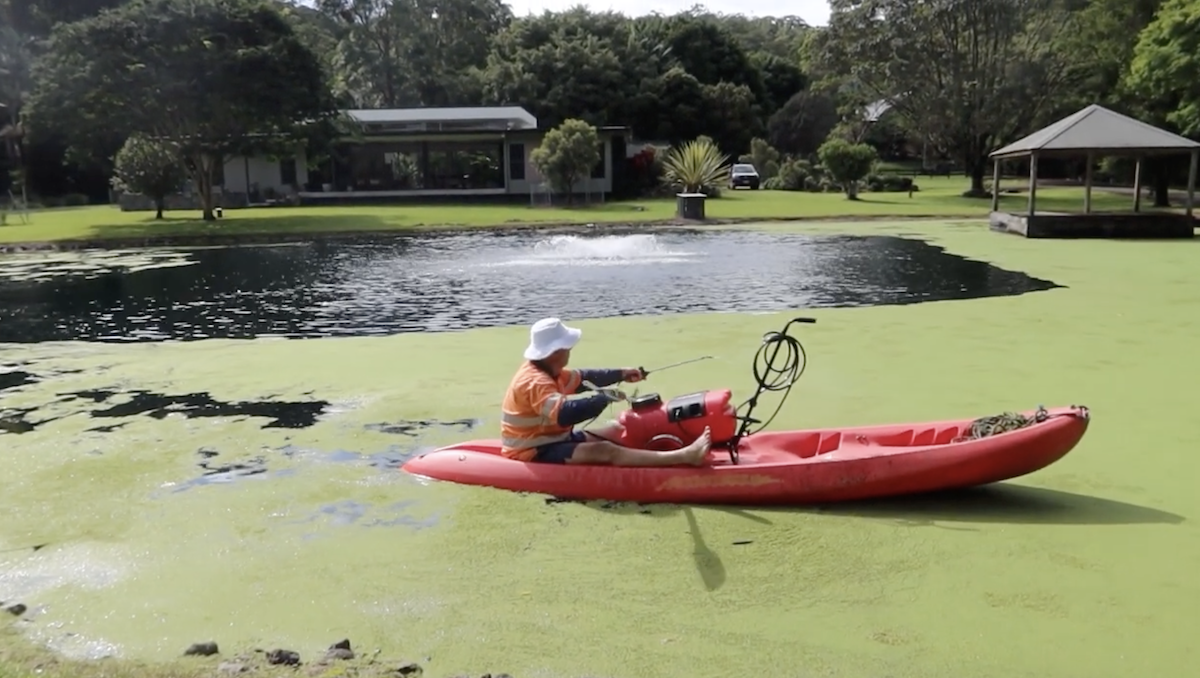
Not all weeds need a full dam treatment. Spot spraying is often more effective and far less wasteful. Surface weeds and emergent plants are straightforward—you can hit them with a backpack sprayer or a small quad-mounted tank. Submerged weeds require a bit more patience, but even a kayak-mounted sprayer can reach them.
For visibility, some algaecides come out bright blue in the water. Others are clear—adding a dye can help you see where your spray is going. The goal is precision: treat only what needs it, and reduce chemical load on the ecosystem.
4. Use Biostim Accelerator in Combination
Using algaecides or herbicides on their own often isn’t enough to get the job done efficiently. That’s where Biostim Accelerator comes in. When applied alongside chemicals, it dramatically improves their effectiveness by feeding the bacterial populations that break down the slime layer surrounding plants and algae.
This slime layer is often why so much chemical is required in the first place: it blocks direct contact with the plant or algae. By encouraging natural bacteria to eat through this layer, Biostim Accelerator lets your herbicide or algaecide reach its target faster and with less chemical.
Beyond that, it speeds up the breakdown of dead plant material. Bacteria fed by Biostim Accelerator consume the decaying matter, preventing it from settling on the bottom and turning into fertiliser for future pests. This reduces the chances of weeds or algae returning quickly.
5. Consider Timing and Weather
Timing is everything. Many chemicals work best under bright sunlight because they’re absorbed through photosynthesis. Treating too early in the morning, too late in the afternoon, on a cloudy day, or just before rain, can waste the chemical—and your money. Sunny, still days give the plants a chance to absorb the product fully, boosting effectiveness while keeping doses lower.
Turn off aerators when spraying, if possible. You want the chemical to linger around the target, not get mixed and diluted unnecessarily. Still water is your friend here.
6. Follow Up With Ecosystem Support
Chemical treatments don’t solve the root problem—they remove the symptoms. Nutrients in your dam are what fuel algae and weed growth. After a chemical application, support the ecosystem:
- Aerate to maintain oxygen levels and stimulate beneficial bacteria
- Apply biostimulants to ramp up populations of beneficial bacteria
- Consider mechanical removal for regrowth management
7. Be Vigilant and Consistent
Small, frequent actions beat the boom-and-bust approach every time. Treating weeds sporadically and ignoring regrowth will eventually lead to bigger problems—and bigger chemical bills. Spot treat new growth promptly, use low doses when possible, and keep on top of the nutrient levels. The ecosystem will thank you.
The Takeaway
Algaecides and herbicides are powerful tools, but only when used thoughtfully. Respect the label, understand your dam, target treatments wisely, follow up with ecosystem support, and use Biostim Accelerator to boost effectiveness and reduce chemical reliance. A balanced approach keeps your water clear, your fish safe, and your dam healthy for the long term.
Get Expert Advice
Want FREE advice on how to treat your water? Contact us and we’ll be happy to help—no obligation.