
Watermilfoil is one of those plants that dam owners tend not to notice until it’s already well established. Growing entirely below the surface, you might not notice it the way you would a floating weed.
But in a dense stand it clogs pump intakes and reduces dissolved oxygen, causing real problems for a working dam. It’s actually native to Australian waterways, which can complicate the management question.
Here’s how to handle it.
What Is Watermilfoil?
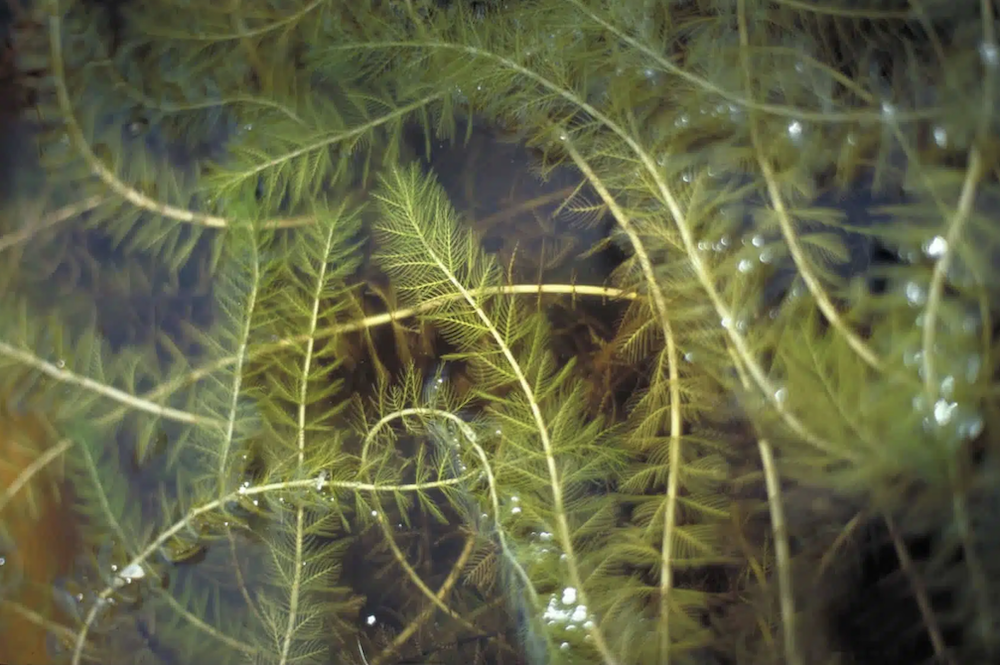
Watermilfoil, or Myriophyllum salsugineum, is a native submerged aquatic plant found across NSW, SA, TAS, VIC and WA. It grows below the water surface, with feathery whorled leaves arranged along its stems. The plant ranges from green to purple in colour. Its leaves become rigid when lifted out of the water, which helps tell it apart from similar-looking species. Flowers are small and appear on short emergent spikes at the water surface during the growing season.
Reproduction occurs through seed and plant fragments. Seeds germinate readily in clear, shallow water, while fragmented stems can root elsewhere in the dam. Physical disturbance is the main dispersal mechanism: propeller action and pump operation break stems into fragments that travel with water currents.
Watermilfoil, Red Watermilfoil and Eurasian Watermilfoil: What’s the Difference?
Australia has two native watermilfoil species. The first is watermilfoil (Myriophyllum salsugineum), covered in this article. The second is red watermilfoil (Myriophyllum verrucosum), a distinctly separate species.
Red watermilfoil:
- Develops stems up to 4 metres long
- Flowers year round (including on drying mud at the water’s edge)
- Doesn’t die back in winter
Its distribution is broader: found across NSW, NT, QLD, SA, VIC and WA, whereas watermilfoil (M. salsugineum) is absent from NT and QLD. Both native species can cause dam management problems at high density, and both respond to the same treatment approach.
The third species worth knowing is Eurasian watermilfoil (Myriophyllum spicatum). This is one of the most destructive invasive aquatic weeds globally. It hasn’t established in Australian waterways but is declared prohibited or noxious in several states, including NSW and QLD. Why is Eurasian watermilfoil a problem? It forms dense surface-to-floor mats across entire water bodies, displacing native vegetation and reducing habitat for fish and aquatic fauna. If you suspect you’ve found Eurasian watermilfoil, notify your state biosecurity authority.
Where Does Watermilfoil Grow?
Native watermilfoil prefers slow-moving or still water. Typical habitats include:
- Farm dams, lakes and irrigation channels
- Water bodies with some salt content in the source (it tolerates slightly saline conditions)
- Shallow, clear margins where seed gets sufficient light to germinate
Because fragments are the main dispersal vector, mechanical disturbance of a stand can accelerate its spread. Boats and equipment used across multiple water bodies can spread viable fragments into the dam.
Why Is Watermilfoil a Problem in Your Dam?
A sparse stand at the dam margin isn’t necessarily cause for immediate action. Watermilfoil has genuine ecological value as habitat for native frogs, waterbirds and invertebrates.
The problem comes with density. When watermilfoil forms thick underwater beds across a significant portion of the dam floor, the effects on water quality and dam function are hard to ignore:
- Dense stands block irrigation pump intakes and obstruct water flow, sometimes causing equipment failure during dry periods when demand is highest.
- A dominant stand crowds out other native aquatic vegetation, steadily reducing biodiversity in the water body.
- As the biomass builds and decomposes seasonally, dissolved oxygen drops, placing fish and other aquatic life under real stress.
- Extensive submerged growth makes swimming, fishing and general access to the water difficult.
Because watermilfoil sits out of sight below the surface, it often reaches problem density before dam owners realise how far it’s spread. The first sign is typically reduced pump performance or a noticeable change in water clarity.
How to Control Watermilfoil
Treating a submerged weed is different from treating a floating species. Surface spraying alone rarely reaches growth below the waterline. The treatment needs to penetrate the water column.
Physical Removal: Aquatic Weed Hand Cutter
For light infestations or accessible sections of a stand, the Aquatic Weed Hand Cutter provides a chemical-free starting point. The serrated blade cuts cleanly through the feathery stems at varying depths, and material can then be raked clear of the water.
Removing everything you cut is critical. Fragments left in the dam are viable and can re-root, so collect all cut material and move it well away from the water before disposal. The hand cutter works best for maintaining a managed stand, not clearing a large established infestation on its own.
Chemical Treatment: WaterTreats Aquatic Weed Killer
For established watermilfoil infestations, WaterTreats Aquatic Weed Killer is our recommendation. It’s a diquat-based contact herbicide effective against submerged and pond weed species, and we rely on it for situations where the growth needs to be tackled below the waterline.
A few rules when treating:
- Don’t treat more than a quarter of the affected area at once, as decomposing material can draw down oxygen levels.
- Wait for each treated section to fully break down before moving to the next.
- Don’t use the water for swimming or irrigation for 10 days after treatment.
- Check the product label for application specifics relevant to your conditions.
A 10-day withholding period applies. No stock watering, irrigation or recreational use until that window has passed. Follow the rate and application guidance for your dam size.
Pro Tip: Use Less Herbicide with Biostim Accelerator
Biostim Accelerator is designed to work alongside herbicides, helping them work more effectively so you use less chemical. You use them in tandem, i.e. spray with herbicide then Biostim Accelerator immediately after.
Plants and algae often develop a protective slime layer over their surfaces. This layer can make it harder for herbicides to reach the plant tissue, meaning more chemical is required to penetrate the layer and achieve an effective treatment.
Biostim Accelerator feeds naturally occurring bacteria that break down this slime layer. By reducing this protective barrier, the herbicide can come into contact with the plant more quickly and effectively, reducing the amount of chemical required.
After treatment, Biostim Accelerator helps beneficial bacterial populations break down dead plant material. This reduces the amount of dead organic matter settling on the dam floor and becoming a source of nutrients for future weed growth.
The beneficial bacteria also break down weed seeds and algae spores left behind after treatment. Reducing this material helps limit the potential for new growth.
Preventing Watermilfoil from Returning
Removal is only half the job. The key to preventing watermilfoil from coming back is managing the nutrients that fuel plant growth. Aeration and probiotics such as Biostim help radically reduce the nutrient supply available to weeds by encouraging populations of beneficial bacteria.
Aerators add oxygen and improve water movement throughout the dam. This creates the conditions beneficial bacteria need to thrive. Probiotics such as Biostim give these bacteria a further boost, helping build large populations that consume organic matter and excess nutrients in the water.
As beneficial bacteria use up these nutrients, there is less available to fuel weed growth. Over time, this suppresses existing weeds–starving them out of the ecosystem. In simple terms: feed the beneficial bacteria, and they consume the nutrients that weeds need to grow.

The main route for watermilfoil entering a dam is plant material on equipment. Boats and trailers moved between water bodies can carry fragments that seed a new infestation. Cleaning equipment before and after moving between water bodies is the most practical biosecurity measure.
Don’t Wait for the Pump to Tell You
The submerged habit that makes watermilfoil easy to overlook is precisely what makes it worth monitoring for. By the time a stand is causing pump problems, clearing it takes considerably more effort than earlier intervention would have.
We hear regularly from dam owners who first notice something is wrong when their pump starts struggling or the water clarity has dropped. By that point, watermilfoil has often been building for a full season or more. It doesn’t show at the surface the way duckweed or salvinia does, and that invisibility lets it get ahead.
At Water Quality Solutions, we work with dam owners across Australia to identify and manage below-surface weed problems before they become expensive. If you’ve noticed changes in pump performance or water quality, contact us and we’ll help you work out what’s happening.
FAQs
Is Australian watermilfoil native?
Yes. Myriophyllum salsugineum is a native species found across NSW, SA, TAS, VIC and WA. It provides genuine ecological value as habitat for frogs, waterbirds and other native fauna. Dense infestations still cause real problems for dam infrastructure and water quality, so management is warranted once growth is large enough to affect how the dam functions.
What’s the difference between watermilfoil and red watermilfoil?
They’re two distinct native species. Watermilfoil (Myriophyllum salsugineum) is found in NSW, SA, TAS, VIC and WA. Red watermilfoil (Myriophyllum verrucosum) has stems up to 4 metres long, flowers year round and is found across a wider range that includes NT and QLD. Both can become problematic in farm dams at high density and both respond to the same treatment methods.
What does watermilfoil look like?
Watermilfoil is a submerged plant with feathery whorled leaves along its stems, growing from the dam floor upward through the water column. It ranges from green to purple in colour. The leaves become rigid when the plant is lifted out of the water. Small flowers appear on emergent spikes at the water surface during the growing season.
How do you get rid of watermilfoil in a dam?
For smaller or accessible stands, the Aquatic Weed Hand Cutter works well for cutting back growth. Remove all cut material from the water to prevent fragments re-rooting. For established infestations, WaterTreats Aquatic Weed Killer is our recommendation for submerged pond weed control. For large or dense stands, contact us for a tailored plan.