
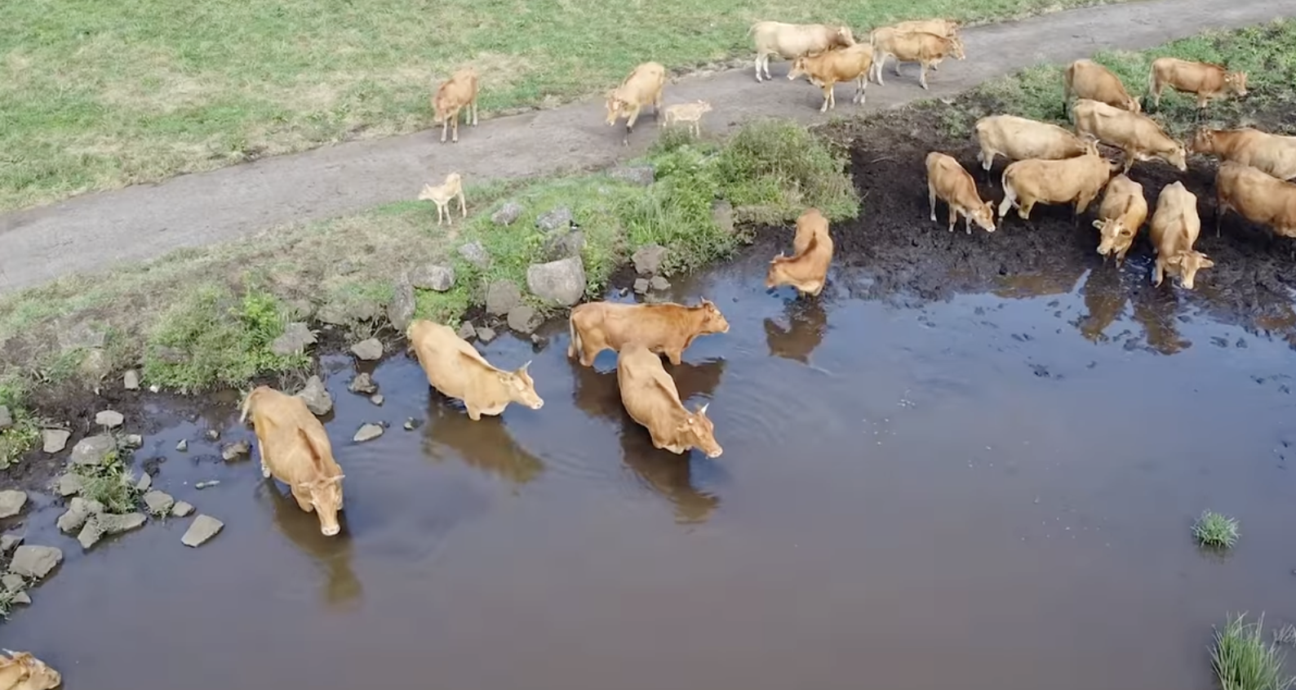
Every year, many customers come to us with a problem similar to this one: they filled their dam over winter, but by February the waterline has dropped well down the bank.
The first thing to understand is that some of that is normal. Sun and wind take water off a dam every day, and stock and irrigation take even more.
You only really need to start paying attention if the level keeps falling after the weather cools, or the drop looks bigger than your use explains. In this case, you may have a leaking dam.
For non-experts, however, it’s not always easy to tell what’s causing the leak. From the bank, a hot week, a thirsty paddock and a leak all look alike. But if you guess wrong you could end up with an even bigger problem.
Prove the leak first, then find the cause, then work out how to fix a leaking dam with the repair that suits it. Here’s how.
Is Your Dam Really Leaking?
Many ‘leaking dam guides’ jump straight into fixes and actually skip the most important step: finding out if your dam is even leaking to begin with. Knowing this will save you money you might otherwise waste on the wrong approach.
Evaporation, stock water and irrigation all lower the level. None of them is a leak.
Here’s an easy way to get an idea if your dam is leaking:
- Mark the water level on a stake or a fixed post.
- Then stand a bucket of water at the edge, on a step or in a shallow spot. The water inside should sit level with the dam outside.
- Weigh the bucket with a stone so it won’t tip.
- Note both levels every few days, and don’t draw any water from the dam while you test.
Evaporation hits the bucket and the dam equally, so if the dam falls further than the bucket, water is leaving some other way.
Context is important, too. When someone rings us about a dam that’s losing water, we start with these questions:
- Is it new or established, lined or earth, and has it ever held water properly?
- When did the loss start, and did it follow desilting, drought or new plumbing?
We also want the level drop measured over several days, after allowing for rain and inflows.
Then watch where the level stops falling. When the dam settles at the same height after each top-up, that narrows the search. It doesn’t prove where the leak is, but it’s a clue. Check the ground below the wall for wet patches, soft soil and rushes growing at the base. DPIRD in Western Australia says these are the obvious signs.
7 Causes of a Leaking Dam
Here’s what could be causing your dam leak:
Evaporation
This one only looks like a leak. The bucket drops as fast as the dam, the ground downhill stays dry and the loss eases when it cools or rains. Nothing needs sealing, and a liner won’t fix it. A deeper dam with a smaller surface loses less water for every litre it holds, so it matters if you’re planning a new one.
Seepage through the floor and walls
The level falls steadily, faster than the bucket. A leaking dam keeps dropping at the same pace, where evaporation eases with the weather. Wet or soft ground below the wall points to seepage through the wall. You might not see a floor leak, so rely on the bucket test. If the level steadies at a certain height, search the wall near that line first. If it keeps falling to the bottom, the whole basin is the problem, and you’ll be looking at sealing or lining.
Cracks, slumping or water carrying soil through the wall need a professional assessment promptly, not a product recommendation.
Cracked or porous soil
Sandy and gravelly ground lets water straight through, and some clays crack as they dry. Dispersive clay is the sneakiest cause of a leaking dam. Its particles fall apart in water, so the dam stays muddy and the clay can wash into small tunnels. Look for cracks in the exposed bank, sand in the bed and water that never clears.
Sandy ground generally needs a liner. If you’re noticing dispersive clay, you should get professional advice first, because the wrong treatment can make tunnelling worse.
Animal damage
Burrowing animals can tunnel through a wall, and stock hooves break down the edge. Look for holes above and below the waterline and a churned, bare bank. Fence stock off and give them a trough. Fill the burrows and compact the soil properly.
Tree roots
Roots crack a wall while they grow, then leave channels behind as they rot. A leak that shows up near trees on or beside the wall is a strong clue. Remove the tree, take out as much root as you can and rebuild the soil in layers. Keep large trees well back from any new wall.
Poor construction
A leaking dam that never held water well probably started with a flaw. NSW DPI lists these things as the usual causes:
- Topsoil left under the wall
- No cut-off trench
- Unsuitable soil
- Poor compaction
The fix is rebuilding the problem section properly, or lining the dam if the soil is poor.
Leaking pipework
If you pump from the dam, check this one first, because it’s the cheapest to fix. Pump lines, outlet pipes and overflow pipes can all leak, and water can also track along the outside of a pipe through the wall.
Look for a wet line along the pipe’s route. Close the outlet valve and see whether the level loss changes. Repair or replace the faulty section and compact the soil back around it.
How to Fix a Leaking Dam
Once you know the cause, how to fix a leaking dam gets simpler. Match the symptom to the repair:
- Pipework: Repair or replace the pipe and recompact the soil around it.
- Roots or burrows: Remove the cause, then rebuild and compact the damaged soil.
- Stock damage: Fence the edge and move drinking to a trough.
- A leak through part of the wall: Repair that section, or seal it.
- Porous floor: Line the dam, or seal the whole basin.
You should also be realistic about whether to fix it at all. DPIRD points out that if a dam still holds usable water at the end of most summers, repairs probably won’t pay for themselves. We agree. A dam that holds through the dry months doesn’t need a major job.
If the whole basin leaks, you have two broad choices. Our guide on how to seal a dam compares clay, bentonite, polymer and liners, and says when each one fails. If you’d rather line it, read how long a dam liner lasts and how to build a dam with a liner first.
Find the Cause Before You Spend Anything
A leaking dam usually has a simple cause. The bucket test is an easy way to see whether the loss is real at the outset. Then, once you’ve found the cause, you can simply refer back to this guide to find out which repair to buy. You only really need to consider sealing or lining once you’ve ruled our faulty pipework (it’s a good idea to start there because it’s often the cheapest fix). However, if you do need to invest in dam liner, we stock a range of options for every dam.
At Water Quality Solutions, we’ve been helping dam, lake and lagoon owners across Australia with liners and aeration for over fifteen years. Tell us what your dam is doing and we’ll be happy to help you work out the cause.