
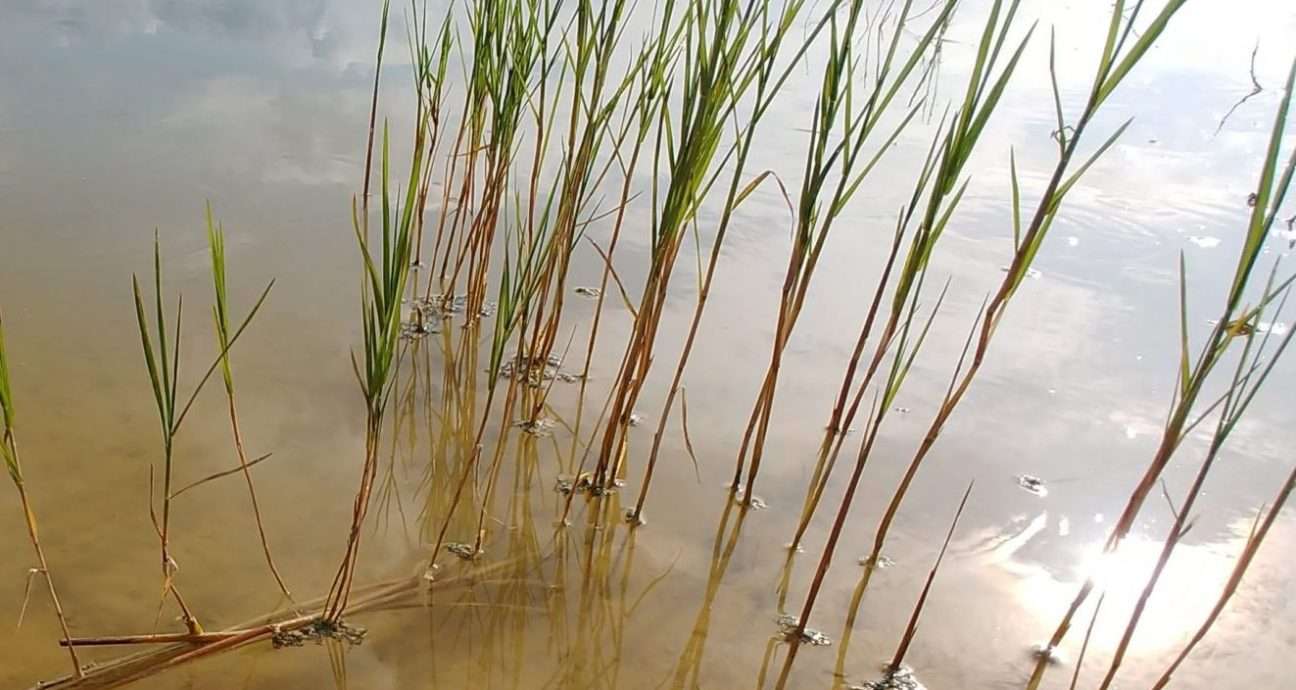
Torpedo grass looks like a manageable problem from the bank. A fringe of stems at the dam edge, reaching about a metre, doesn’t suggest the kind of weed that takes serious effort to clear.
What catches dam owners out is what’s happening underground. Torpedo grass sends rhizomes through the soil in every direction, and every fragment left behind after cutting is capable of producing a new plant.
Dam owners across QLD and NSW who’ve tried to get rid of torpedo grass by cutting it back know exactly what happens next: it returns in the same spot weeks later. Understanding why is the first step to actually dealing with it.
What Is Torpedo Grass?
Torpedo grass (Panicum repens) is an exotic species found in QLD and NSW. It’s an emergent plant, growing at the water’s edge with stems above the surface and a root system anchored in the bank soil or shallow water margin.
The plant relies primarily on vegetative reproduction rather than seed. Underground rhizomes spread horizontally through the soil, and the name comes from their shape: pointed at both ends, like a torpedo. Every rhizome fragment left in the soil after cutting is capable of producing a new plant. That’s the central problem when trying to kill torpedo grass at the dam margin. The above-ground growth is the visible symptom; the rhizome network is the actual plant.
Torpedo grass also tolerates saline conditions and a wide range of moisture levels, from temporarily flooded to relatively dry. That tolerance makes it well-suited to the variable conditions at a farm dam edge.
Torpedo Grass Identification: What to Look For
Above the surface, torpedo grass identification starts with the stems: flat, tough and green, reaching roughly a metre in height. The leaves can have a pale or waxy appearance on the underside, and the plant puts out flowering shoots at certain times of year. In dense stands, the growth forms a thick, matted mass at the water’s edge that’s noticeably more resistant to pulling than softer margin grasses.
Below the surface is where torpedo grass identification is most certain. Follow a stem down to the soil and you’ll find the rhizomes extending outward from the base: hard, cream or pale-coloured, and sharply pointed at both ends. That torpedo shape is distinctive and unlike the fibrous roots of most other grass species you’ll find at a dam margin.
In an established infestation, the rhizome network extends well beyond the visible edge of the stand above ground, which means the infestation is always larger than it appears from the bank.
Why Is Torpedo Grass a Problem in Your Dam?
Torpedo grass causes practical problems for both the dam and the people using it as the infestation builds:
- Dense growth restricts stock access to the water and makes it hard to maintain or reach pump infrastructure at the bank.
- As stems and leaves accumulate, the mat traps silt and debris at the margin, reducing effective water volume over time.
- Stems extending into the water column can block pump intakes; once enough material builds up, blockages develop faster than expected.
- The dominant stand crowds out native bank vegetation and reduces the habitat value of the dam margin for birds, frogs and other wildlife.
- Decaying material after die-back or treatment increases the nutrient load and reduces dissolved oxygen in the dam.
Torpedo grass also prevents the natural regeneration of more desirable bank plants, with the rhizome network outcompeting other species below the surface as well as above it.
How to Get Rid of Torpedo Grass
The challenge with how to get rid of torpedo grass is that surface removal only addresses the visible portion of the plant. An effective program has to reach the rhizomes, and that means combining mechanical preparation with a chemical treatment that can translocate underground.
Physical Removal: Aquatic Weed Hand Cutter
The Aquatic Weed Hand Cutter is useful at the preparation stage. It reduces the above-ground bulk and opens up access to the bank for herbicide application. On small or early-stage patches, it can serve as the primary method, though the rhizome network usually means it isn’t enough on its own.
The key is removing every scrap of cut material from site. Rhizome fragments left in moist bank soil will re-establish. Work a section at a time, collect cut material as you go and dispose of it well away from the water. Leaving cuttings at the margin, or tipping them back into the dam, will undo the work. Cutting alone won’t kill torpedo grass at the root; it clears the site for the chemical program to follow.
Killing Torpedo Grass with Knockout Aquatic Herbicide
Killing torpedo grass effectively means getting herbicide into the rhizome system, not just knocking back the visible shoots. Knockout Aquatic Herbicide is the product we rely on for established torpedo grass infestations around farm dams. It’s a low-toxicity glyphosate approved for use in and around waterways, and it works on contact with plant tissue, translocating down through the stems to the roots.
That translocation is what makes it the right choice for killing torpedo grass. Unlike weeds that spread by seed, torpedo grass persists through its underground network. Treating only the visible stems doesn’t resolve the infestation. The herbicide needs to travel down through an actively growing plant to reach the rhizomes, which means timing the application correctly matters more here than with many other species.
A few things to get right on application:
- Treat plants that are actively growing; a stressed or dormant plant won’t move the herbicide through to the rhizomes effectively.
- Allow adequate dry time after application; rain within a few hours reduces effectiveness significantly.
- Avoid overspray into open water; Knockout is approved for use around waterways but isn’t effective on submerged material.
- Follow the product label for rates and any water-use restrictions for your dam.
Multiple applications may be needed. Rhizome fragments that survived the first treatment will produce new growth, and treating that regrowth early is far more efficient than waiting for a second established stand to develop.
Pro Tip: Use Less Herbicide with Biostim Accelerator
Biostim Accelerator is designed to work alongside herbicides, helping them work more effectively so you use less chemical. You use them in tandem, i.e. spray with herbicide then Biostim Accelerator immediately after.
Plants and algae often develop a protective slime layer over their surfaces. This layer can make it harder for herbicides to reach the plant tissue, meaning more chemical is required to penetrate the layer and achieve an effective treatment.
Biostim Accelerator feeds naturally occurring bacteria that break down this slime layer. By reducing this protective barrier, the herbicide can come into contact with the plant more quickly and effectively, reducing the amount of chemical required.
After treatment, Biostim Accelerator helps beneficial bacterial populations break down dead plant material. This reduces the amount of dead organic matter settling on the dam floor and becoming a source of nutrients for future weed growth.
The beneficial bacteria also break down weed seeds and algae spores left behind after treatment. Reducing this material helps limit the potential for new growth.
Preventing Torpedo Grass from Returning
Removal is only half the job. The key to preventing torpedo grass from coming back is managing the nutrients that fuel plant growth. Aeration and probiotics such as Biostim help radically reduce the nutrient supply available to weeds by encouraging populations of beneficial bacteria.
Aerators add oxygen and improve water movement throughout the dam. This creates the conditions beneficial bacteria need to thrive. Probiotics such as Biostim give these bacteria a further boost, helping build large populations that consume organic matter and excess nutrients in the water.
As beneficial bacteria use up these nutrients, there is less available to fuel weed growth. Over time, this suppresses existing weeds–starving them out of the ecosystem. In simple terms: feed the beneficial bacteria, and they consume the nutrients that weeds need to grow.

After a treatment program, the priority is closing the gaps that torpedo grass would re-colonise. Bare, disturbed soil at the dam margin is exactly the environment this plant thrives in, so re-vegetating treated areas with native bank grasses gives incoming rhizome fragments less opportunity to establish.
Managing cattle access during the growing season after treatment is worth planning for. Livestock can carry rhizome fragments on their hooves and re-introduce torpedo grass to a bank that’s just been cleared. Temporary fencing along the treated section while the bank stabilises makes a real difference to the outcome.
Check treated areas through the following growing season and treat any regrowth promptly; letting it re-establish means starting the process again.
The Problem Runs Deeper Than It Looks
Torpedo grass at the bank margin is a different management task depending on how established the infestation is. Caught early, a single treatment program and careful disposal of cut material is usually enough. Left to develop, the rhizome network becomes extensive, and how to get rid of torpedo grass in that situation becomes a multi-step project.
The infestation visible above the waterline always underestimates the real size of the problem. If you’re dealing with torpedo grass at your dam, contact us at Water Quality Solutions and we’ll help you work out the right approach.
FAQs
What does torpedo grass look like?
Torpedo grass (Panicum repens) grows to around a metre along the dam margin, with flat, tough green stems and leaves that sometimes have a pale or waxy underside. The key torpedo grass identification feature is the rhizomes: hard, cream-coloured, pointed at both ends. Dense stands form thick, matted growth resistant to being pulled out by hand.
How do you get rid of torpedo grass?
Getting rid of torpedo grass means addressing both the above-ground growth and the underground rhizome network. The Aquatic Weed Hand Cutter reduces bulk and prepares the site, but cutting alone won’t kill torpedo grass permanently. Knockout Aquatic Herbicide, applied to actively growing plants, translocates through the stems to the rhizomes and is our recommendation for killing torpedo grass in established infestations. Multiple applications may be needed as surviving fragments resprout.
Does cutting torpedo grass kill it?
No. Cutting removes the visible growth but leaves the rhizome system intact below the surface. Each rhizome fragment remaining in the soil can resprout and re-establish the plant. Cutting is a useful preparation step before chemical treatment, but to kill torpedo grass for good you need a herbicide that can travel through the plant to the underground root system. That’s how to get rid of torpedo grass at the source rather than just at the surface.