
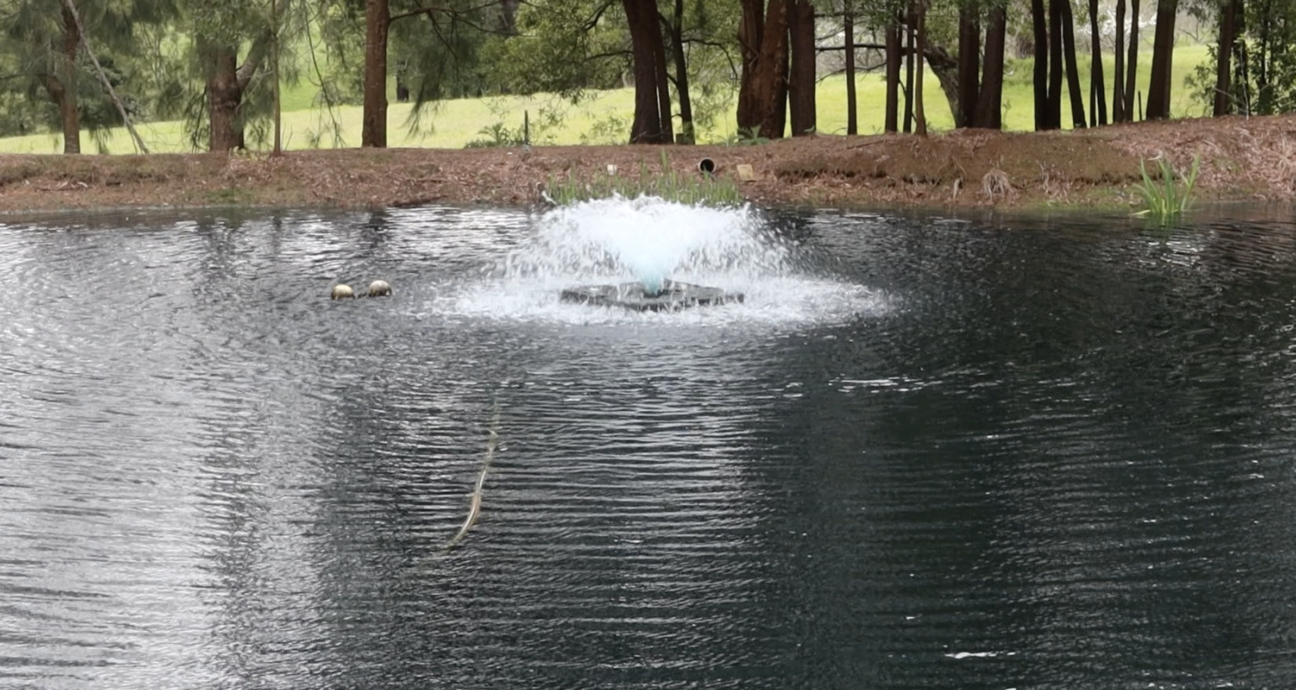
A clear, healthy pond adds beauty and balance to any property. And for the first few weeks or months, when the water is first added, it’s always an attractive landmark.
However, ponds and dams are always susceptible to degradation in water quality and presentation over time. Water becomes murky as sludge forms at the bottom. Plants can become a little unwieldy. And algae is an ever-present issue to keep an eye on.
Pond dye offers a simple, natural solution. It enhances the visual appeal of your water by facilitating a universal colour across your entire water body while gently reducing the growth of algae and unwanted weeds. And it’s all done without harming fish, native plants, or wildlife.
In this article, we’re going to take a closer look at what pond dye is as well as how and when to use it. We’ll explore the benefits it brings to a water ecosystem. And we’ll touch upon some of the best practices during application to make sure you get the most out of it.
What is Pond Dye?
Pond dye is a food-grade colour-enhancing agent designed to tint water with a deep, natural black or blue shade. It works by filtering sunlight through the water column, which helps limit the amount of light that reaches the pond bottom. This, in turn, reduces the growth of submerged algae and weeds, while leaving surface plant growth and floating algae unaffected.
Modern pond dyes are 100% non-toxic and made from the same food-safe dyes used in cooking and confectionery. This makes them completely safe for fish, pets, livestock, and irrigation use.
As you might expect, the more pond dye you apply to your water space, the stronger the final colour will be.
Benefits of Using Pond Dye
Thousands of pond and dam owners turn to pond dye to help enhance their spaces, and for good reason. When applied correctly, you can expect to see the following benefits.
Enhanced Appearance
Put simply, pond dye makes the water look good. It helps to hide murkiness and weeds growing at the bottom of the pond (particularly if you opt for a black pond dye) and gives your waterways a universal, professional appearance that is very appealing.
Reduced Sunlight Penetration
Dye acts as a filter to prevent excess sunlight from reaching the pond bottom. This means there is less opportunity for weeds and algae to grow freely.
Supports Aquatic Life
Pond dye can actually help keep your fish and other aquatic creatures in good health. This is because it can add shade to your spaces and helps to minimise temperature fluctuations, which can increase stress among your fish population.
It’s Eco-Friendly
As well as the dye itself being safe, the material used to encase the dye is fully biodegradable. So there is no chance of unwanted waste causing damage.
It’s Safe and Long-Lasting
Mixing dye into the water is perfectly safe and doesn’t affect wildlife or swimmers. The treatment is also long-lasting, with some applications lasting up to eight weeks (depending on sunlight exposure and weather conditions).
Where Can I Buy Pond Dye?
If you’re ready to enhance your pond’s appearance safely and effortlessly, our solupack pond dyes are the easiest way to go. Each pre-measured, biodegradable satchel delivers beautiful colour and natural algae control, with no mess, no measuring, and no risk.
At Love My Dam, our e-store, we offer pond dye in three colours; blue, black, and blue-black. You can order them as individual Solupacks, or you can purchase them in bundles of either five or ten packs, giving you an ideal solution depending on your water space.
How to Use and Apply Pond Dye
Pond dye solupacks are designed to be very straightforward to use. All you need to do is place the satchel directly into your aquatic ecosystem. The satchel will degrade, releasing the dye into the water system. The water’s natural movements will disperse the dye across your entire system within a couple of days.
Some additional things to think about when applying your pond dye include:
- Application rate: One solupack should be enough to treat up to one megalitre of water. Of course, if you wish to create a more definitive colour, or for large ponds, you simply add more satchels until you have your desired hue.
- Pond size: For ponds with less than one megalitre, you don’t need to use the entire satchel. You can cut the satchel and use only half, while sealing the remaining dye in a fresh container. Just be sure to use gloves when making the transfer.
- Placement: For fast, optimal results, you should try and place your satchel as close as you can to your pond’s aeration system or inlet. If your pond has a waterfall of some kind, then this is ideal as well. Any area of moving water will help speed up the dispersal process.
- Maintenance: The colour will gradually fade over several weeks as sunlight, rainfall, and water exchange dilute the dye. Reapply every 4-8 weeks (or as needed) to maintain a consistent shade and balanced look.
- Finish: Depending on which colour you select, you’ll achieve slightly different finishes. If you opt for a blue pond dye, for example, you’ll gain a vibrant, lagoon-like finish which is ideal for smaller, ornamental pond spaces. Black dye will have a different impact. It will result in a natural, mirror-like appearance with strong UV protection. Think carefully about what impact you wish to create.
Best Practices for Applying Pond Dye Effectively
While pond dye solupacks are a very easy solution to apply, there are still certain things that you can do to enhance the process even further. Some of these include:
- Always following the recommended dosage rates. While pond dye is harmless, it’s still advisable to go with what the manufacturers say.
- Apply evenly across the pond surface. Try to ensure it gets to your pond’s edge and shallow areas.
- Begin with a light tint – you can always add more to strengthen the colour.
- Keep Solupacks dry before use. They dissolve immediately upon contact with water.
- Combine pond dye with aeration and Biostim to create a healthy and balanced ecosystem.
Get FREE Expert Advice
Since 2009, we’ve been providing expert advice on all things related to pond and dam maintenance and water health. As well as industry-leading dyes, we have a whole range of probiotic solutions, aerators, and maintenance tools to help keep your waterways functioning properly.
Request a callback today and let’s see what we can do for you.
FAQs
Will pond dye kill algae?
No. Pond dye is harmless to all plants and won’t directly kill algae. However, it does reduce light levels that enter the water, which slows down regrowth of submerged algae.
Is pond dye safe for fish and pets?
Yes. Food-grade pond dyes are 100% safe for fish, pets, livestock, and wildlife.
Will pond dye affect water lilies or floating plants?
No. Pond dye only filters light below the surface – it won’t have any affect on surface plants.
Can dyed water be used for irrigation or swimming?
Yes. Once dispersed, dyed water is perfectly safe for swimming and irrigation use.