
Price per square metre is a fair place to start when comparing dam liners. Most Australians will go with the cheapest option and call it a day.
However, price is only one factor of many. You can buy a cheap plastic pond liner for much less than an EPDM pond liner, but after ten summers, they’re going to be behaving very differently. Lifespan is a very important consideration.
Maybe you’re choosing the best pond liner for a new dam. Maybe you’re wondering how much life is left in the one you have. Either way, the useful question is how many years you get for the money.
How Long Does a Dam Liner Last?
A dam liner made from EPDM will often last for decades. A plastic liner usually needs replacing sooner, and often much sooner where it’s in direct sunlight. That gap is the whole case for paying more upfront.
However, exactly how long the dam liner will last depends on thickness, installation and how much of the liner sits above the waterline. Here’s what you need to know:
EPDM pond liner lifespan
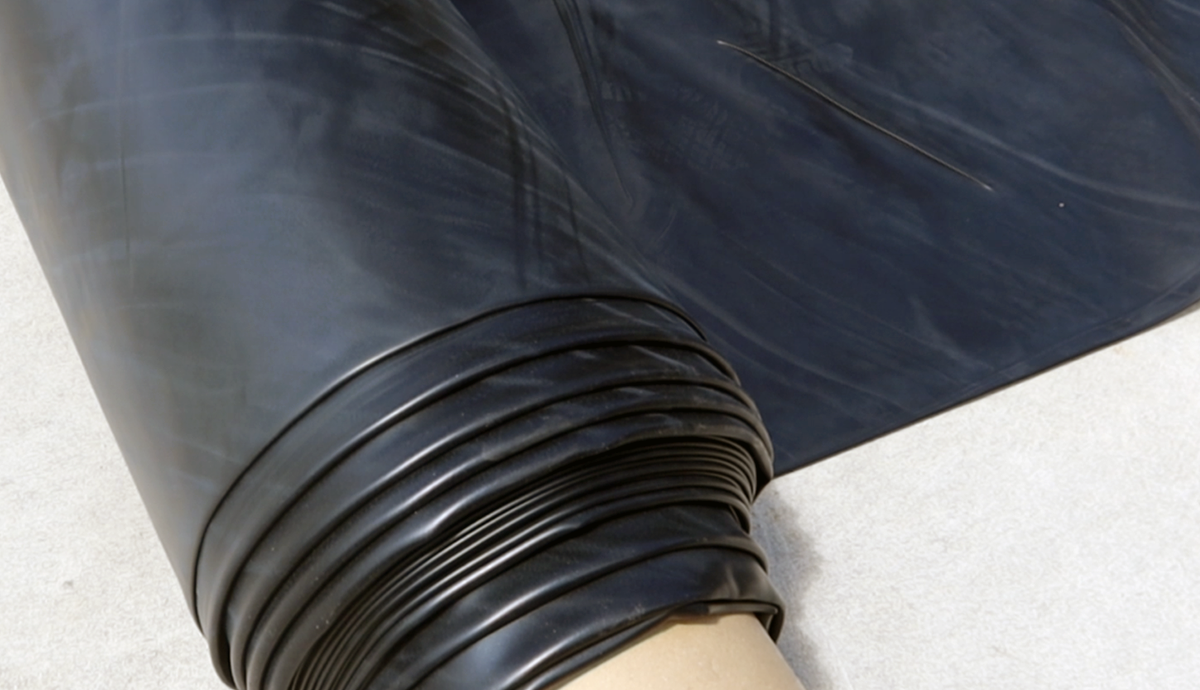
EPDM (Ethylene Propylene Diene Monomer) is a synthetic rubber, and it’s what we recommend for most dams because of how long it lasts. Rollgum, the Spanish-made EPDM we supply, carries a guarantee up to 20 years, and it will often last even longer. Treat the guarantee as the minimum the manufacturer will stand behind.
Plastic pond liner lifespan
A plastic pond liner means PVC (polyvinyl chloride) or HDPE (high-density polyethylene). Exposed PVC usually needs replacing after about 10 years, because the plasticisers that keep it flexible migrate out and the sheet stiffens. HDPE is tougher, but it’s stiff, it stress-cracks at folds and sharp points, and it needs specialist welding.
What Spanish Reservoirs Tell Us About an EPDM Pond Liner
The long-term lifespan of EPDM pond liner is well established. CEDEX, a Spanish government laboratory, studied EPDM in agricultural reservoirs in the Canary Islands.
At El Boquerón reservoir on Tenerife, a 2014 study found the liner still met the minimum standards for a new geomembrane after 21 years. A 2016 follow-up found it still passed a fold test at minus 55°C after 22 years. It had lost up to 68% of its stretch, and the exposed slopes aged most, while samples kept under water held up better.
We can learn two lessons from these studies:
- EPDM ages slowly and keeps working well past two decades
- The sun does most of the aging.
What these studies don’t show is how thinner dam liner on a patchy base would fare. Those liners were 1.14 to 1.52 mm thick and sat in engineered reservoirs, so check which thickness any lifespan quote refers to.
What Shortens a Dam Liner’s Life?
In our experience, there are four main issues or mistakes that reduce a dam liner’s lifespan, in this order:
- Installation: Landscapers or installers place heavy, sharp rock on the liner without preparing the ground under it, so the ground gives way and pulls the liner down. This is avoidable if you firm the base and avoid sharp rock. Our guide to pond underlay explains how.
- Sun: Sunlight ages any dam liner, but only above the waterline. The Spanish samples show it. On a dam, the exposed band grows whenever the level drops. A dam that falls by a metre every summer ages faster than one that stays full. Tuck the top edge into the anchor trench and cover what you can with soil.
- Animals and roots: Cattle hooves, burrowing animals and tree roots all push on the liner from one side or the other. Fence stock back from the edge and keep trees well away. The Spanish lab’s own list of causes also included poor compaction and washed-out banks.
- Seams and edges: These fail last, and they fail badly. A seam needs a primed, dry surface, and an edge needs a proper anchor trench. EPDM stretches to follow ground movement, but an edge that pulls out can’t.
How to Check the Dam Liner You Already Have
Walk the full edge of the dam once a year, and again after a big storm or a long dry spell. Inspect four spots:
- Waterline: Look for a dull, chalky or cracked surface where the liner dries in the sun.
- Seams: Check for lifting edges, bubbles or gaps.
- Anchor trench: Look for exposed liner, washed-out soil or liner that has pulled loose.
- Pipe penetrations: Check clamps and the liner around inlet and outlet pipes.
Most of what you’ll see is cosmetic. If it’s just an algae film, light discolouration and a few shallow wrinkles, you don’t need to do anything. Some things, however, warrant attention, such as:
- A lifting seam
- A cut
- Exposed liner in the trench
- A level that keeps falling
Photograph each spot from the same place every year, because a slow change shows up in a picture more clearly than it does from memory.
An EPDM pond liner puncture is easy to fix. Lower the water below the damage and clean and dry the area. Prime it, press a patch of Rollgum Form tape over it and roll it flat.
Work Out the Cost Per Year Before You Buy
A dam liner earns its price over the years it stays watertight. EPDM lasts longest, and the sun above the waterline and careless installation shorten the life of any liner. Check yours each year.
At Water Quality Solutions, we’ve been helping dam, lake and lagoon owners across Australia with liners and aeration for over fifteen years. Tell us about your dam and we’ll be happy to quote the right Rollgum EPDM liner.