
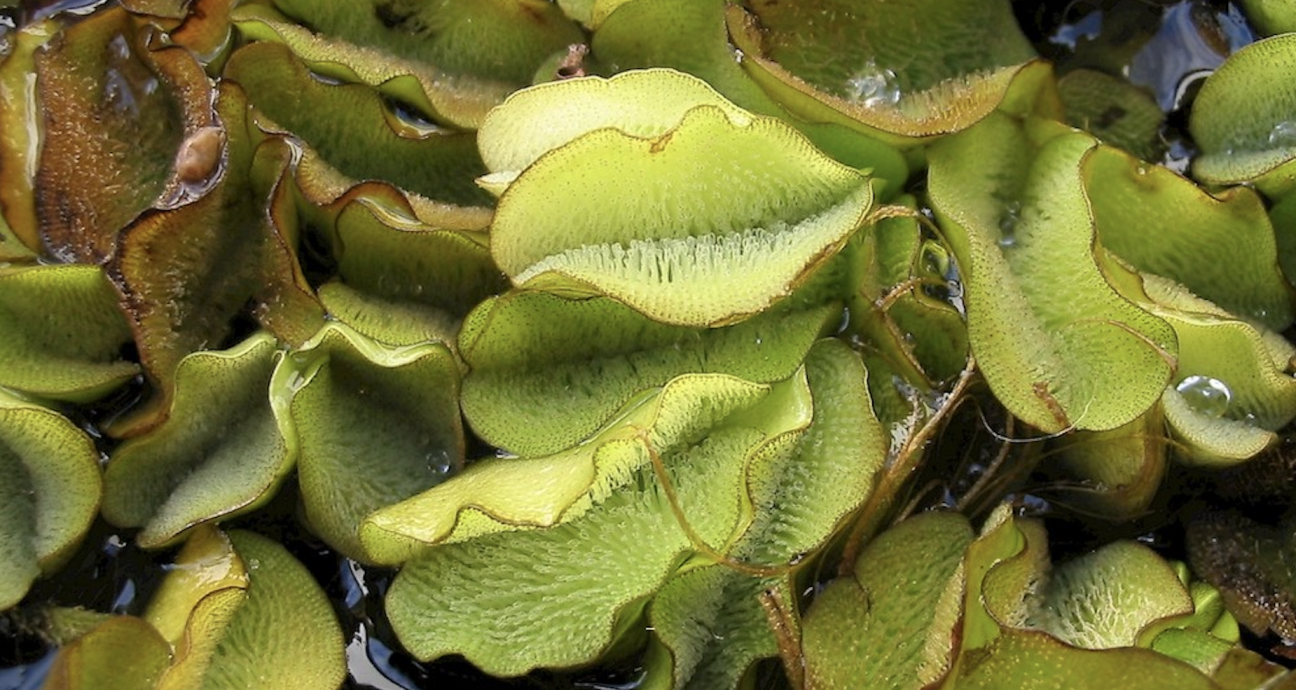
A bright green mat drifting across your dam’s surface can look almost benign at first glance. Salvinia molesta doesn’t have the look of a serious problem. But once it takes hold, it spreads quickly across the surface, suffocating the water beneath and leaving the dam functionally unusable if you leave it long enough.
Here’s what you need to know, and what to do about it.
What Is Salvinia Molesta?
Salvinia molesta is a free-floating aquatic fern, not a flowering plant. It doesn’t root into sediment: it drifts on the surface and reproduces without viable spores in Australia, spreading entirely through vegetative fragmentation and bud expansion. A single fragment is enough to start a new infestation, which makes it very hard to contain once it arrives.
The plant moves through three distinct growth stages. At the first, the primary stage, it produces small, flat, oval leaves with a ridged upper surface that float across open water. As conditions become more favourable, those leaves fold inward along a central rib into a boat shape. This is the acute stage. At the mat stage, the leaves pack tightly together and the mat can reach 60 centimetres thick. It’s that final form that causes the most serious damage.
Salvinia molesta is an exotic species with no ecological value in an Australian waterway. It turns up across NSW, QLD, VIC, and TAS, and carries declared noxious weed status in several of those states.
Is Salvinia the Same as Giant Salvinia?
Giant salvinia is another name for salvinia molesta, referring to the scale the plant reaches at the mat stage. You may also see it listed as Kariba Weed or Water Moss. All these names describe the same species, managed the same way. If you’ve been searching for giant salvinia control and landed here, you’re in the right place.
Where Does the Salvinia Plant Grow?
The salvinia plant favours slow-moving or still freshwater: dams, ponds, lakes, billabongs, and quiet stretches of rivers and drainage channels. It doesn’t cope well with fast-moving water, but it can spread from sheltered upstream sections into areas with more flow.
Salvinia molesta grows most aggressively in nutrient-rich conditions. Agricultural runoff carrying nitrogen and phosphorus gives it the fuel to move from the butterfly stage to a closed mat faster than most property owners expect.
The most common route of arrival is human activity. Infested boats and trailers are the primary vectors, along with improperly disposed aquarium or ornamental pond plants and waterfowl. Once the weed arrives, a single fragment is all it needs. Even a brief stop in an affected waterway is a genuine risk.
Some new infestations start with garden ponds. When people choose to plant salvinia as a decorative floating plant and then dispose of it near natural water, or when a pond overflows into a drain, the weed can establish in waterways well away from the original source.
Why Is Salvinia Molesta So Dangerous?
Most aquatic weeds compete with other vegetation or limit access. Salvinia molesta can do something far more severe: seal the water body entirely at the mat stage. The consequences extend well beyond weed competition:
- It stops oxygen diffusion into the water, which kills fish and other aquatic life.
- It blocks all light from reaching submerged plants, killing off established underwater vegetation.
- It alters the water’s chemistry and temperature in ways that favour harmful bacteria and algae.
- Left untreated, it makes remediation significantly more expensive than early intervention would have been.
There’s no ecological benefit to salvinia molesta in an Australian dam. It offers nothing to livestock or the wider water system.
How to Get Rid of Salvinia from Your Dam
The key factor in getting rid of the salvinia plant isn’t which treatment you use: it’s when. At the primary stage, when individual leaves are still visible and clear water remains across the surface, treatment is manageable. A fully closed mat is considerably harder to penetrate with herbicide spray, and the volume of decomposing material places additional oxygen demands on the water. Act before the mat closes.
Physical Removal: DeSkuzzer 2.0
For smaller infestations and as a follow-up to chemical treatment, the DeSkuzzer 2.0 is the physical removal tool for the job. It drags across the water surface to scoop up floating material, which you dump responsibly well away from the waterline.
Fragment management matters more with salvinia molesta than with most weeds. Because the plant reproduces from fragments, every piece left on the surface can seed a new patch. Work the affected area methodically and make sure nothing is left floating.
Running the DeSkuzzer after chemical treatment is equally important. Clearing dead salvinia from the surface before it sinks and decomposes reduces the oxygen draw on the water during recovery, particularly where you’ve treated a sizeable section.
Chemical Treatment: WaterTreats Aquatic Weed Killer
Apply WaterTreats Aquatic Weed Killer as an overall spray, wetting the foliage of the salvinia plant thoroughly at 5-10L per hectare of surface area. Clear water gives you the best result: suspended sediment interferes with herbicidal contact. Use the higher rate for heavy infestations or where water clarity is poor.
For dense or established mats, a single application is often not enough. Plan for a repeat spray at 7-14 days to catch regrowth or areas the first pass didn’t fully reach.
A few rules when treating:
- Don’t treat more than a quarter of the affected area at once, as decomposing material can draw down oxygen levels.
- Wait for each treated section to fully break down before moving to the next.
- Don’t use the water for swimming or irrigation for 10 days after treatment.
- Check the product label for application specifics relevant to your conditions.
Pro Tip: Use Less Herbicide with Biostim Accelerator
Biostim Accelerator is designed to work alongside herbicides, helping them work more effectively so you use less chemical. You use them in tandem, i.e. spray with herbicide then Biostim Accelerator immediately after.
Plants and algae often develop a protective slime layer over their surfaces. This layer can make it harder for herbicides to reach the plant tissue, meaning more chemical is required to penetrate the layer and achieve an effective treatment.
Biostim Accelerator feeds naturally occurring bacteria that break down this slime layer. By reducing this protective barrier, the herbicide can come into contact with the plant more quickly and effectively, reducing the amount of chemical required.
After treatment, Biostim Accelerator helps beneficial bacterial populations break down dead plant material. This reduces the amount of dead organic matter settling on the dam floor and becoming a source of nutrients for future weed growth.
The beneficial bacteria also break down weed seeds and algae spores left behind after treatment. Reducing this material helps limit the potential for new growth.
Preventing Salvinia from Returning
Removal is only half the job. The key to preventing salvinia from coming back is managing the nutrients that fuel plant growth. Aeration and probiotics such as Biostim help radically reduce the nutrient supply available to weeds by encouraging populations of beneficial bacteria.
Aerators add oxygen and improve water movement throughout the dam. This creates the conditions beneficial bacteria need to thrive. Probiotics such as Biostim give these bacteria a further boost, helping build large populations that consume organic matter and excess nutrients in the water.
As beneficial bacteria use up these nutrients, there is less available to fuel weed growth. Over time, this suppresses existing weeds–starving them out of the ecosystem. In simple terms: feed the beneficial bacteria, and they consume the nutrients that weeds need to grow.

Because salvinia molesta can arrive on a fragment the size of a fingernail, prevention comes down to what you bring to the water and what you take away from it:
- Clean your boat, trailer, and all equipment thoroughly before moving between waterways. Waders and anything that retains moisture are particularly effective carriers: inspect and dry them before entering another water body.
- Never dispose of aquarium or ornamental pond plants near natural waterways. If you’re establishing a feature pond, don’t plant salvinia or any floating fern species: even ponds that seem contained can drain or overflow into a natural watercourse. If you already have it in a pond, remove it carefully and dispose of it in the bin, not near water.
- If you see what looks like salvinia molesta in a waterway, report it to your local council or state weeds authority. The earlier it’s flagged, the easier it is to address.
- Consider nutrient management around the dam. Reducing agricultural runoff cuts the phosphorus and nitrogen that accelerate growth once a fragment does arrive.
Moving water is less hospitable to salvinia than a still, nutrient-loaded surface. An aerating fountain keeps the dam circulating and disrupts the surface conditions the weed needs to establish, while supporting healthier water quality overall.
Tackle Salvinia Molesta the Easy Way
It doesn’t have to become a permanent feature of your dam. Early action and thorough fragment management, alongside careful attention to how equipment moves between water bodies, reduce the risk of re-infestation significantly.
At Water Quality Solutions, we’ve helped dam owners across Australia get on top of floating weed problems before they become costly. If it has appeared on your property and you’re not sure where to start, contact us and we’ll work out the right approach for your water.
FAQs
Is salvinia molesta a declared weed in Australia?
Salvinia molesta is an exotic aquatic fern found across NSW, QLD, VIC, and TAS. It carries declared noxious weed status in several Australian states, which may mean you have a legal obligation to manage it on your property. Contact your local council or state weeds authority to confirm what applies in your area.
What does a salvinia plant look like?
At the primary stage, the salvinia plant produces pairs of small, oval floating leaves with a ridged upper surface. As it develops, those leaves fold inward and upward along a central rib, becoming boat-shaped. At the mat stage the leaves grow considerably larger, tightly folded and so densely packed the surface can feel almost solid. Each leaf cluster also has a submerged, feathery frond that hangs beneath the water.
What kills salvinia in dams?
WaterTreats Aquatic Weed Killer is effective against salvinia molesta and giant salvinia at any stage when applied as an overall spray wetting the foliage thoroughly. Early-stage infestations respond well to a single application; dense or closed mats often need a follow-up spray at 7-14 days. Pair chemical treatment with the DeSkuzzer 2.0 to collect dead material and limit the risk of fragment-based regrowth.