
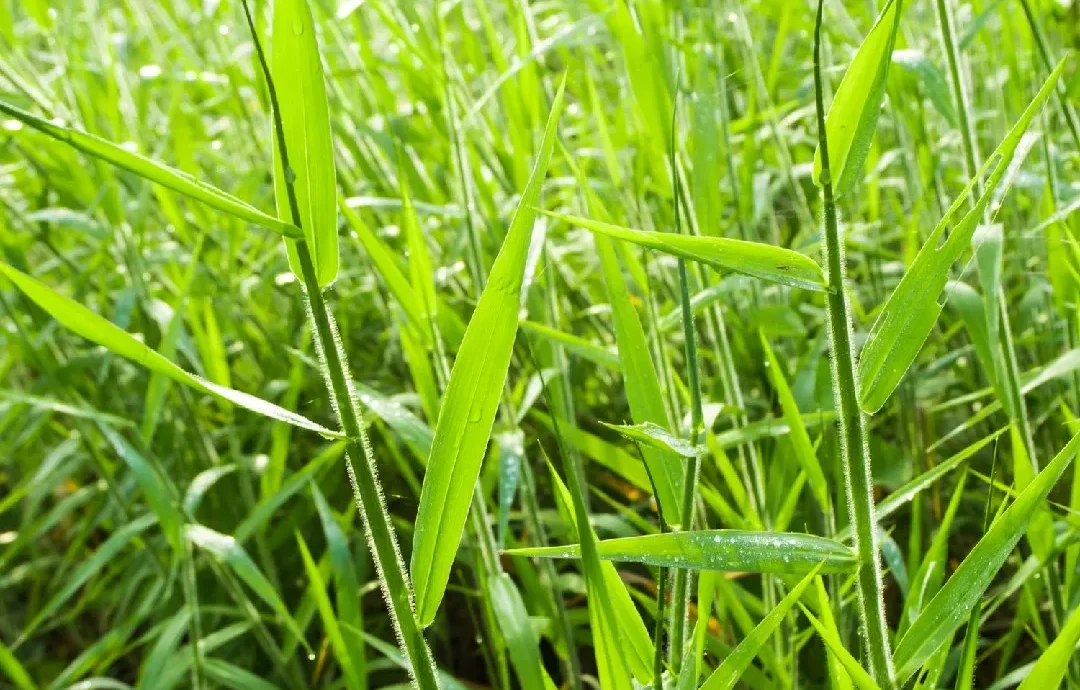
Para grass didn’t arrive in Australian waterways by accident. It was deliberately introduced as a tropical pasture grass, productive, fast-growing and palatable to cattle.
The same qualities that made it useful for grazing are what make it a problem once it reaches a dam edge. It grows fast, recovers quickly and spreads from every stem fragment left behind after cutting. Dam owners across QLD, NT, NSW and WA know it well, often because they’ve watched a strip of para grass at the bank turn into something that requires serious effort to clear.
What Is Para Grass?
Para grass (Urochloa mutica) is an introduced species, originally from tropical Africa and South Asia, now established across the warmer regions of Australia. The stems and leaves are green and covered in fine hairs, giving the plant a rough texture when touched. It grows upright, reaching heights of up to 2 metres, and puts out long creeping stems at the base that trail along the bank and over the water’s surface.
These creeping stems are central to how para grass spreads. It rarely sets seed in Australia; vegetative growth is its primary means of reproduction. Wherever a stem makes contact with moist soil or shallow water, it can put down roots and establish a new plant. Flooding is a key dispersal mechanism: fragments carried downstream land in the next still water body and get to work.
Para Grass Benefits: The Other Side of the Story
The para grass benefits case is straightforward in the right context. It was brought to Australia because it’s a productive tropical forage grass, capable of high yields on marginal soils during the wet season when other species struggle. In well-managed paddocks away from waterways, those para grass benefits remain real, particularly in the northern regions.
But the para grass benefits that apply in a fenced paddock disappear at the dam edge. Farmers who run cattle near a dam may not recognise the plant at the bank as a problem, or may assume it’s doing useful work. The vigour and wet-tolerance that make it useful in pasture are exactly what make it invasive in a waterway setting. At the dam margin, it’s a weed.
Where Does Para Grass Grow?
Para grass is distributed across NSW, NT, QLD and WA, with the densest populations in the tropical and subtropical north. It tolerates both freshwater and slightly brackish conditions, which broadens the range of water bodies it can colonise.
It establishes first at the bank margin, where moist soil meets shallow water. Farm dams, irrigation channels and floodplain wetlands are all common sites. Para grass is most likely to take hold where:
- Water is still or slow-moving
- Temperatures are warm and the growing season is long
- The bank is disturbed or bare, with little established groundcover to compete with
Livestock are also a dispersal route. Cattle moving between water bodies can carry stem fragments on their hooves, introducing para grass to dams that haven’t been exposed to floodwater from an infested waterway.
Why Is Para Grass a Problem in Your Dam?
A single para grass plant at the bank margin is manageable. The problem is the speed at which it develops from a fringe into a structural issue, covering significant ground in a single growing season as the creeping stems extend outward over the shallows.
The effects on a working farm dam are practical:
- Dense bank growth restricts stock access to the water and makes it harder to maintain pump infrastructure at the water’s edge.
- Accumulated biomass traps silt and debris at the margin, reducing effective water volume over time.
- Stems reaching into the water column block pump intakes. As material builds up, blockage happens faster than expected.
- Decaying para grass after flooding or die-back reduces dissolved oxygen and adds to the nutrient load, putting pressure on fish and aquatic life.
- The dense stand displaces native riparian vegetation and reduces habitat for the birds, frogs and invertebrates that use the bank zone.
There’s also a practical para grass control challenge as the infestation matures: the more material builds up, the harder it becomes to access and treat. Dense growth on steep or inaccessible banks can require substantial clearance before chemical treatment is possible.
How to Control Para Grass
Para grass grows at and above the waterline, which makes it more accessible than submerged weeds. The challenge is managing regrowth and preventing re-establishment from fragments during and after treatment.
Physical Removal: Aquatic Weed Hand Cutter
For accessible sections of an infestation or as preparation before herbicide application, the Aquatic Weed Hand Cutter cuts through para grass stems cleanly. It’s a practical first step on smaller or early-stage infestations, and on larger stands it’s used to reduce bulk and open up access for chemical treatment.
Fragment management is the critical point with para grass. Every cut section of stem left in moist contact with soil can root and establish a new plant. A few rules for handling cut material:
- Don’t leave cuttings at the bank; collect everything as you go
- Move all cut material well away from any moist ground before disposal
- Never tip cut stems into the dam or nearby waterway
Physical removal works best as the first step in a program rather than the sole method.
Chemical Treatment: Knockout Aquatic Herbicide
Knockout Aquatic Herbicide is the product we rely on for established para grass control in and around farm dams. It’s a glyphosate-based herbicide that the plant absorbs through its leaf tissue and translocates down to the crown and root system. That translocation matters: because para grass spreads through its creeping stems rather than seed, treating only the visible shoots doesn’t resolve the infestation. The herbicide needs to reach the base of the plant.
A few things to get right on application:
- Treat actively growing plants; the herbicide needs to be moving through the plant to travel down to the crown
- Choose a calm, dry day and allow enough time for the product to absorb before rain or dew
- Avoid overspray into the open water, particularly at the dam edge
- Follow the product label for rate and any water-use restrictions for your dam
Pro Tip: Use Less Herbicide with Biostim Accelerator
Biostim Accelerator is designed to work alongside herbicides, helping them work more effectively so you use less chemical. You use them in tandem, i.e. spray with herbicide then Biostim Accelerator immediately after.
Plants and algae often develop a protective slime layer over their surfaces. This layer can make it harder for herbicides to reach the plant tissue, meaning more chemical is required to penetrate the layer and achieve an effective treatment.
Biostim Accelerator feeds naturally occurring bacteria that break down this slime layer. By reducing this protective barrier, the herbicide can come into contact with the plant more quickly and effectively, reducing the amount of chemical required.
After treatment, Biostim Accelerator helps beneficial bacterial populations break down dead plant material. This reduces the amount of dead organic matter settling on the dam floor and becoming a source of nutrients for future weed growth.
The beneficial bacteria also break down weed seeds and algae spores left behind after treatment. Reducing this material helps limit the potential for new growth.
Preventing Parra Grass from Returning
Removal is only half the job. The key to preventing parra grass from coming back is managing the nutrients that fuel plant growth. Aeration and probiotics such as Biostim help radically reduce the nutrient supply available to weeds by encouraging populations of beneficial bacteria.
Aerators add oxygen and improve water movement throughout the dam. This creates the conditions beneficial bacteria need to thrive. Probiotics such as Biostim give these bacteria a further boost, helping build large populations that consume organic matter and excess nutrients in the water.
As beneficial bacteria use up these nutrients, there is less available to fuel weed growth. Over time, this suppresses existing weeds–starving them out of the ecosystem. In simple terms: feed the beneficial bacteria, and they consume the nutrients that weeds need to grow.

The main re-establishment risk after a treatment program is flooding. Floodwater carrying fragments from infested waterways upstream can deposit new material on a treated bank within a single wet season. There’s no practical way to prevent fragments from arriving with flood debris, but you can reduce the likelihood of them taking hold.
Revegetating treated banks with native grasses and groundcovers is the most effective long-term para grass control measure available. Dense native cover gives incoming fragments less bare soil to root into, and a bank that recovers quickly is far less vulnerable than one left bare.
Managing stock access at the margin during the growing season after treatment is also worth planning for. Cattle grazing the bank can reintroduce fragments on their hooves and keep the soil disturbed enough for para grass to establish again. Fencing the bank temporarily after treatment can make a meaningful difference to the outcome.
Don’t Let the Margin Become the Problem
Para grass at the bank edge is a different management task at 10 stems than it is at 10 metres. Caught early, one or two herbicide applications and careful disposal of cut material is often enough. Left to build up, it becomes a multi-step project requiring clearing, treating, monitoring and revegetating before the bank is stable again.
We regularly see dam owners dealing with para grass that could have been addressed cleanly at early establishment but has spread to the point where the pump is already affected by the time they act.
If you’re seeing para grass at your dam margin, contact us at Water Quality Solutions and we’ll help you work out the right approach.
FAQs
Is para grass a weed in Australia?
Yes. Para grass (Urochloa mutica) is an introduced species classified as an invasive plant in several states including QLD and NT. There are recognised para grass benefits in managed pasture settings, where it’s a productive tropical forage grass. At waterways it’s a serious problem: its vigour, tolerance of wet conditions and ability to spread from stem fragments makes it difficult to contain once it reaches a dam.
What does para grass look like?
Para grass is a tall, upright grass reaching up to 2 metres. The stems and leaves are green and covered in fine hairs. It puts out long creeping stems at the base that spread along the bank and over the water surface. Dense stands can build up quickly at dam margins. It’s found in tropical and subtropical regions of Australia, including NSW, NT, QLD and WA.
How do you get rid of para grass?
For early or accessible patches, the Aquatic Weed Hand Cutter reduces bulk and opens up access. All cut material must be removed from site, as stem fragments left at the water’s edge will re-root. For established infestations, Knockout Aquatic Herbicide is our recommendation for para grass control. Apply to actively growing plants, follow the product label for rates and water-use restrictions, and plan for bank revegetation after treatment to reduce re-establishment. For long-term eradication, we recommend aeration and Biostim.