
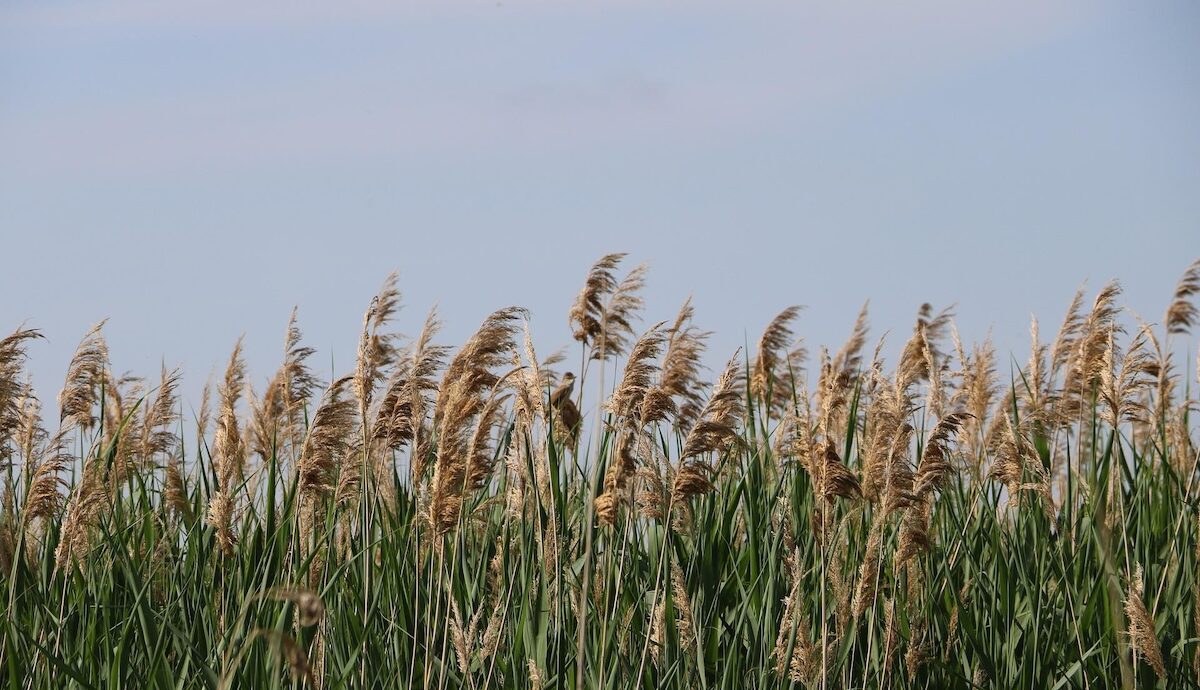
Tall, feathery reeds growing along your dam’s edge can look like a natural feature of the landscape. In many cases, they are. Phragmites australis, or common reed phragmites, is a native Australian plant found across every state and territory.
But native doesn’t always mean harmless. Once it takes hold along a dam margin, it spreads quickly and can affect everything from water access to fire safety on your property.
Here’s what to look for and what to do about it.
What Is Phragmites Australis?
Phragmites australis, known as common reed, is a large emergent grass found in ACT, NSW, NT, QLD, SA, TAS, VIC, and WA. It grows from thick, fleshy rhizomes and produces hollow stems reaching up to 3 metres tall and about 2 centimetres wide. Leaves are smooth and flat, up to 80 centimetres long. In late summer, the plant produces large, dense, feathery seed heads: one of the most recognisable features of any phragmites species.
Young common reed can be confused with common rush or giant sedge before the flower heads form. The hollow stem is the clearest distinction. Common rush stems are solid and round; phragmites stems are hollow and stiffen noticeably as the plant matures.
It’s also worth understanding how Australia’s native phragmites australis differs from the situation overseas. Introduced phragmites species have become highly invasive in parts of North America and Europe, and much of the available control advice you see online originated in those conditions.
Australia’s common reed is a separate phragmites species: it is native here and belongs in the landscape. That distinction matters when reading overseas management recommendations, which can overstate the urgency of full eradication.
Where Does Phragmites Grass Grow?
Common reed phragmites grows along the edges of lakes, swamps, dams, and watercourses, and on poorly drained ground that stays wet for part of the year. It tolerates high salinity, waterlogging, and acid sulphate soils, which makes it more adaptable than many aquatic plants.
Phragmites spreads by seed, carried by water currents and by horizontal underground runners that extend the stand outward each season. A small stand near a dam inlet can spread steadily along the bank margin without much help. Waterlogged ground after seasonal flooding is particularly favourable, and a wet growing season can allow a stand to expand its footprint considerably within twelve months, especially where there’s excess nutrient load in the water.
Can Phragmites Be Beneficial?
In the right context, phragmites grass is genuinely useful. A limited stand can provide:
- Grazing for livestock along the dam’s edge
- Pollutant sequestration, keeping contaminants from circulating through the water body
- Nesting and foraging habitat for waterbirds
These benefits are real, but they depend on stands that remain limited in extent and are not actively competing with how you use the water. Once a stand begins to dominate the dam margin, the balance shifts.
Why Is Common Reed Phragmites a Problem in Your Dam?
Dense phragmites growth creates several compounding problems for dam owners:
- As a large emergent plant, it shades out smaller aquatic vegetation and outcompetes other species at the water’s edge. Its bulk creates a barrier to stock water access, and inlet pipes and irrigation fittings near an established stand need regular clearing.
- When phragmites grass dies back in cooler months, it dries to a dense mass of hollow stalks that burn readily. An established common reed phragmites stand close to fencing or property infrastructure is a genuine fire hazard, particularly in years with a dry winter.
- Decomposing material from seasonal die-back can deplete dissolved oxygen in the water, placing fish and other aquatic life under stress. In severe infestations, fish death is possible.
How to Control Phragmites Australis
Timing matters. Treating before seed heads form in late summer limits the following season’s spread. Because phragmites australis grows from a persistent underground rhizome system, surface treatment alone does not end an infestation. Follow-up monitoring and, in most cases, more than one round of treatment will be needed.
Physical Removal: Aquatic Weed Hand Cutter
For small or recently established stands, the Aquatic Weed Hand Cutter provides a useful starting point without chemicals. You can also use a brush cutter (if you can keep the blades far out of the water). Phragmites stems stiffen considerably as the plant matures, and the serrated blade cuts cleanly through them at and below the waterline. Clear every cut section from the water as you go. Fragments that float free can lodge at the bank margin and re-establish.
Cutting before applying herbicide is particularly worth doing with phragmites. A tall, dense stand that dies back in place after treatment releases a large volume of organic material as it decomposes, and that breakdown draws heavily on dissolved oxygen in the water. Reducing the bulk first gives you more control over that impact. The regrowth that follows will also emerge as fresh green shoots rather than stiff established stems, which takes up the herbicide more readily.
Chemical Treatment: WaterTreats Aquatic Weed Killer
WaterTreats Aquatic Weed Killer targets phragmites at its most active point: the green tissue of stems and leaves during the growing season. It works on contact, absorbing rapidly into plant tissue and producing peroxide that desiccates the cell structure. Late spring and early summer, when phragmites is pushing strong new growth through those hollow stems, gives you the best treatment window.
Where water movement near the treatment area may reduce contact time between the product and the stems, using WaterTreats alongside AquaSticker will improve adhesion.
Because WaterTreats does not travel into the root system, it won’t reach the rhizome network phragmites relies on for regrowth. Expect the plant to regenerate after the first application. That isn’t a failure. Each treatment round cuts off the photosynthesis the rhizome bank needs to sustain itself, and with follow-up applications targeting each flush of regrowth, the stand progressively loses vigour.
As treated phragmites breaks down, dissolved oxygen in the water can drop. To reduce this risk:
- Treat no more than a quarter of the affected area in a single application
- Wait for that section to fully break down before moving to the next
- Do not use dam water for swimming or irrigation for 10 days after treatment
- Check the product label for application rates specific to your conditions
Pro Tip: Use Less Herbicide with Biostim Accelerator
Biostim Accelerator is designed to work alongside herbicides, helping them work more effectively so you use less chemical. You use them in tandem, i.e. spray with herbicide then Biostim Accelerator immediately after.
Plants and algae often develop a protective slime layer over their surfaces. This layer can make it harder for herbicides to reach the plant tissue, meaning more chemical is required to penetrate the layer and achieve an effective treatment.
Biostim Accelerator feeds naturally occurring bacteria that break down this slime layer. By reducing this protective barrier, the herbicide can come into contact with the plant more quickly and effectively, reducing the amount of chemical required.
After treatment, Biostim Accelerator helps beneficial bacterial populations break down dead plant material. This reduces the amount of dead organic matter settling on the dam floor and becoming a source of nutrients for future weed growth.
The beneficial bacteria also break down weed seeds and algae spores left behind after treatment. Reducing this material helps limit the potential for new growth.
Preventing Phragmites from Returning
Removal is only half the job. The key to preventing common reeds from coming back is managing the nutrients that fuel plant growth. Aeration and probiotics such as Biostim help radically reduce the nutrient supply available to weeds by encouraging populations of beneficial bacteria.

Aerators add oxygen and improve water movement throughout the dam. This creates the conditions beneficial bacteria need to thrive.
Probiotics such as Biostim give these bacteria a further boost, helping build large populations that consume organic matter and excess nutrients in the water.
As beneficial bacteria use up these nutrients, there is less available to fuel weed growth. Over time, this suppresses existing weeds–starving them out of the ecosystem. In simple terms: feed the beneficial bacteria, and they consume the nutrients that weeds need to grow.
For the best long-term results, combine biological management with good bank management. Avoid unnecessary soil disturbance around the water’s edge after clearing, and where practical, establish lower-growing, competitive ground cover to stabilise bare areas.
Finally, check your dam margins at least once a season. Common reed is much easier to manage when it is a few scattered young plants than when it has developed into a metre-high stand with an established root system beneath it.
Manage Common Reed for the Long Term
Phragmites australis is part of Australia’s natural waterway environment. Managing common reed phragmites around your dam isn’t always about eradication. It’s about keeping growth at a level that doesn’t interfere with water access, dam function, or fire safety on your property.
At Water Quality Solutions, we’ve helped property owners across Australia manage common reed phragmites and other emergent weeds for over fifteen years. If you are dealing with an established stand and are not sure where to start, contact us and we will work out the right approach for your property.
FAQs
Is phragmites australis the same as common reed?
Yes. Phragmites australis is the scientific name; common reed is the most widely used common name. The plant is also known as bamboo reed, cane grass, giant reed, and reed grass. All of these names, when used for a tall, feathery-headed reed at the water’s edge, refer to the same phragmites species.
Is phragmites native to Australia?
Yes. Phragmites australis is native and found across all states and territories. This sets it apart from the situation overseas, particularly in North America, where introduced phragmites species are highly invasive. In Australia, common reed belongs in the landscape, but it still requires management when it spreads unchecked around a dam.
How deep do phragmites roots grow?
Common reed has an extensive rhizome system that spreads both horizontally and vertically through the soil. The rhizomes extend well below the surface, which is why cutting or treating above-ground growth rarely provides lasting control on its own. Any management plan for phragmites grass needs to account for rhizome regrowth, with follow-up monitoring after the initial treatment.